Gardeners are want to make war on a pet hate. I am close to that with Lemna minor, a diminutive floating aquatic perennial that strives to form a solid cover on the surface of our pond. It’s called ‘Duckweed’ from here on and is one of the smallest and simplest of flowering (although it rarely does) plants or, as Shakespeare in King Lear alluded, it is " … the green mantle of the stagnant pool … ".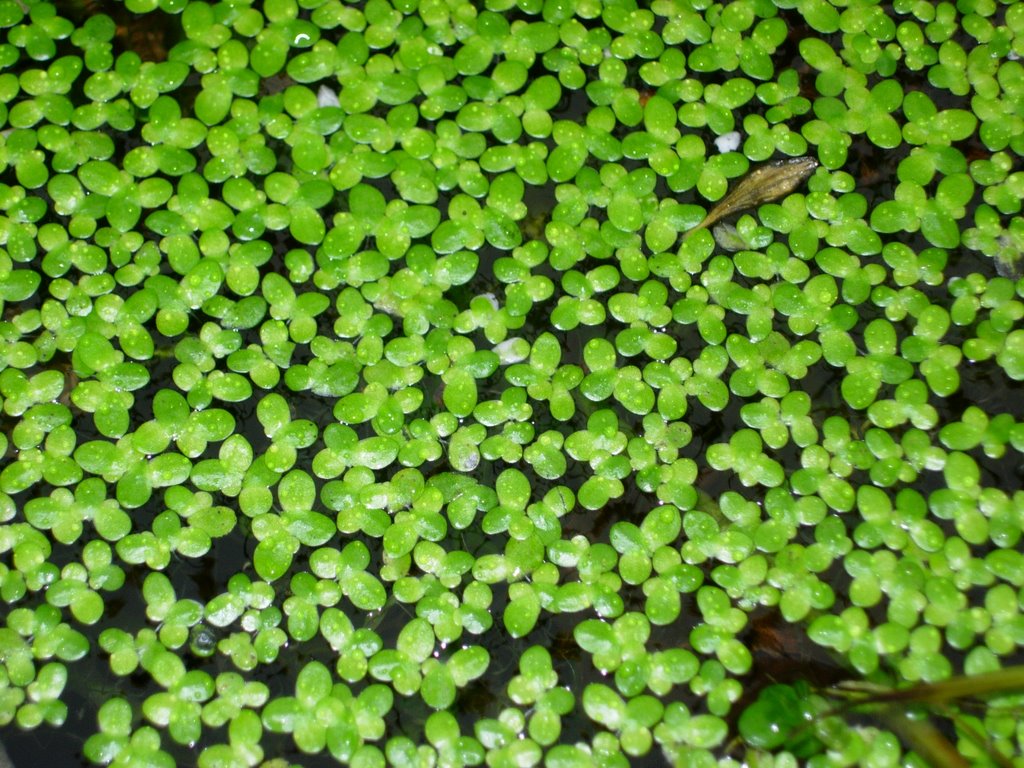
A cover of Duckweed shades the water below and reduces the growth of algae. In small amounts it can be quite appealing, the trouble is Duckweed is all or nothing. There’s no middle ground to this free-floating weed that with sunshine doubles in surface area every few days and can cope with temperatures as low as 7ºC for normal growth. It spreads rapidly across bodies of still water rich in nutrients, especially high levels of nitrogen and phosphate, and survives best at a pH between 4.5 and 7.5 but is tolerant to a wide pH range.
Duckweed is made up of metabolically active cells with very little structural fibre. The tissue contains twice the protein, fat, nitrogen and phosphorus of other like plants and makes them very high in nutrional value.
Herbivore fish could be the solution, but not with the temperatures here over winter. Goldfish and other carp are said to be particularly fond of Duckweed. Most effective is persistent pond dipping with a net to keep it in check. So there I stand most mornings, pond dipping for this diminutive weed, the harvest going on the compost heap. If
As the summer draws to a close, Lemna forms small rootless dark green or brownish plants. These dense, dormant, starchfilled structures sink from view to the bottom of the pond, ready to rise for next spring’s onslaught. Oh what joy to come!


No comments:
Post a Comment